Day to Day of a Principal Engineer
- Rafael Dohms
- Career , Conferences
- November 18, 2026
- 5 min read
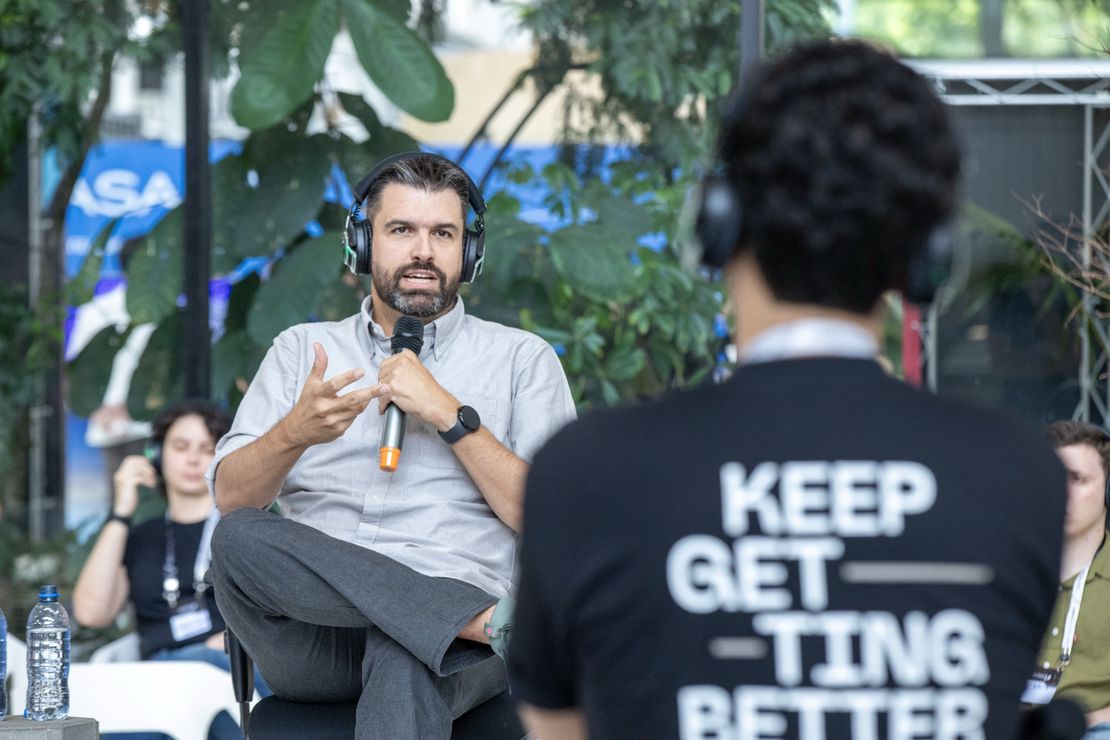
This past weekend I led a mentoring session at CodeCon Select with Damiana Costa. What sets CodeCon Select apart is its participatory formats, like mentoring, fishbowls, and AMAs, where the audience helps shape the talk. That makes for a much richer event, and I highly recommend it.
To prepare for this session, I synthesized my personal observations with empirical findings from a survey of 42 senior technical leaders, evenly split between Staff and Principal Engineers across platform, product, and cross-functional teams. What came out of both the conference floor and the data is that senior IC roles are not a straight continuation of senior engineering. Somewhere along the way, how you create value, how you influence people, and how you spend your days all change.
My core belief about the Principal+ roles is that they hinge on two primary capabilities: Strategic Autonomy and Contextual Awareness.
Strategic Autonomy
At this level, you no longer get the roadmap handed to you; instead, your internal motivation paired with your capacity to define your own mandate will be the key factors of your role. This is where you manage up, align with stakeholders, and learn to communicate your ideas well.
Contextual Awareness
The second one is knowing the landscape your company operates in, and that takes a few layers:
- The Organizational Topology: the overall shape of your company, from size to structure and the seniority of engineers. For example, our survey showcased that in larger organizations (5000+), 80% of respondents rely on building consensus via demonstrating proof-of-concept code. In mid-sized organizations, alignment mostly happens through 1:1 relationships. Your influence tactics must match the scale of the room.
- The Leadership Dynamics: who the stakeholders are, who you need to execute, and their purviews, capabilities, and roles.
- The Reality of the Business and Market: the state of the industry (macroeconomics), the company’s financial standing and growth stages, and the core needs of the business.
- External Technical Horizons: How the broader industry is solving comparable challenges. In our research, 73% of senior technical leaders named engineering blogs and technical whitepapers as their most critical learning resources, and 60% added books and long-form literature on top. Staying aware means constantly checking your internal technical choices against what the rest of the industry is doing.
I prepared these two as my opening salvo, and the discussion from there was rich. Questions were very diverse, from what an average day looks like, how we influence without authority, how we decided between the manager path, IC path, and just being a technical specialist, how managers can help people looking to make staff or above, how we measure our success, how we work with quarterly plans, and such. Let me line up some of those stage discussions with the survey data.
Where does your day start?
Mornings are mostly coordination. In our survey, 85% of respondents start their day triaging Slack and email, and 70% spend their first hours planning and prioritizing. Only 45% begin by reviewing PRs or directly unblocking teammates, and just 15% open design docs or system metrics.
Unblocking teams is still essential, but you have to guard against living in reactive triage. When meetings and urgent requests eat the working day, the focused specialist work gets pushed to the margins. Deep architectural thinking only happens if you schedule room for it on purpose.
So many meetings
Meetings are central to the Principal role, and they are also a constant source of anxiety about whether you are “actually getting things done.” Some meetings need you as the protagonist, others need you quiet in the corner, and the trick we all have to learn is extracting value from both. Meetings are where we nudge projects, get context, and direct people while giving them the credit. They are also where the 1:1 feedback happens, so plan those well and pay attention to what they really cost.
How to overcome “it looks like you don’t do anything”
I found this remark interesting, and I’ve seen it in the wild before. A principal engineer’s impact is systemic, not transactional, so outside observers sometimes can’t see it. It lines up with the survey’s biggest surprise: the delegation and responsibility balance (27%).
One respondent described their hardest career lesson as realizing “how difficult it is to not do certain things (and thereby leave room for others to shine).” Another put it this way: “Throw out the metrics you used to judge your success before. Your primary output is elevating others.”
We took this further on stage, debating how much managing up matters and making sure your manager connects your team’s achievements with your own.
The business comes before the tech
A classic failure at this level is designing an elegant, idealized architecture that ignores business constraints. When survey respondents were asked which critical mindset shift is required to reach the Principal level, Business Strategy and Metrics was the top response (40%), far ahead of purely technical skills.
This also means working with newer engineers and helping them overcome the “just tell me what to build” approach and translating to them what the business signals mean for their projects.
The bigger career questions
The audience also raised a few broader questions about building an advanced IC career:
- The Manager vs. IC Path: You do not need formal management authority to fix systemic organizational problems. Several survey respondents noted that stepping into management taught them valuable communication skills, but also proved that senior ICs can tackle systemic friction just as effectively through technical influence.
- Burnout and Boundaries: Staying deep in daily feature delivery while also carrying org-wide architectural responsibility is, as one respondent put it, a “fast way to burnout.” Clear boundaries and ruthless prioritization are survival skills.
Wrap up
The mentoring circle and the survey ended up in the same place, and one respondent said it better than I could:
“Realizing our job is not to be the smartest person in the room, but to pull those smartest people in to be consulted and get alignment on direction to move initiatives forward.”